
Step by Step Guide to Fashion Designing Course Layyah 2026
Layyah, a district in southern Punjab characterized by its agricultural heritage, traditional craftsmanship, and strong family-oriented culture, represents an emerging destination for creative education including fashion designing.
For aspiring designers in this culturally rich region where traditional values meet gradual modernization, fashion designing courses offer meaningful pathways to transform artistic talent into professional capability while building sustainable careers in Pakistan’s expanding fashion industry.
The decision to pursue fashion designing education represents a significant commitment requiring investment of considerable time, financial resources, and dedicated personal effort. Unlike conventional career paths with predictable clear trajectories, standardized progression, and guaranteed outcomes, fashion designing offers both tremendous creative fulfillment and considerable entrepreneurial challenge.
Success depends not only on the quality of education received but also critically on individual creativity, business acumen, market awareness, resilience through inevitable setbacks, and persistent effort applied consistently over extended periods without guaranteed immediate returns.
Also Read: Tips for Choosing a Fashion Designing Course Attock 2026
Short answer About Fashion Designing Course Layyah
Fashion Designing Course Layyah provide training in garment creation, design principles, and fashion business fundamentals through programs ranging from three-month skill certifications focusing on specific techniques like embroidery or basic tailoring to one-year certificate courses covering comprehensive foundations.
Available institutes offer curricula teaching fashion illustration, pattern making, garment construction, textile knowledge, color theory, traditional embroidery and embellishment techniques particularly relevant to local craftsmanship, and basic business management.
Fashion Education Landscape in Layyah
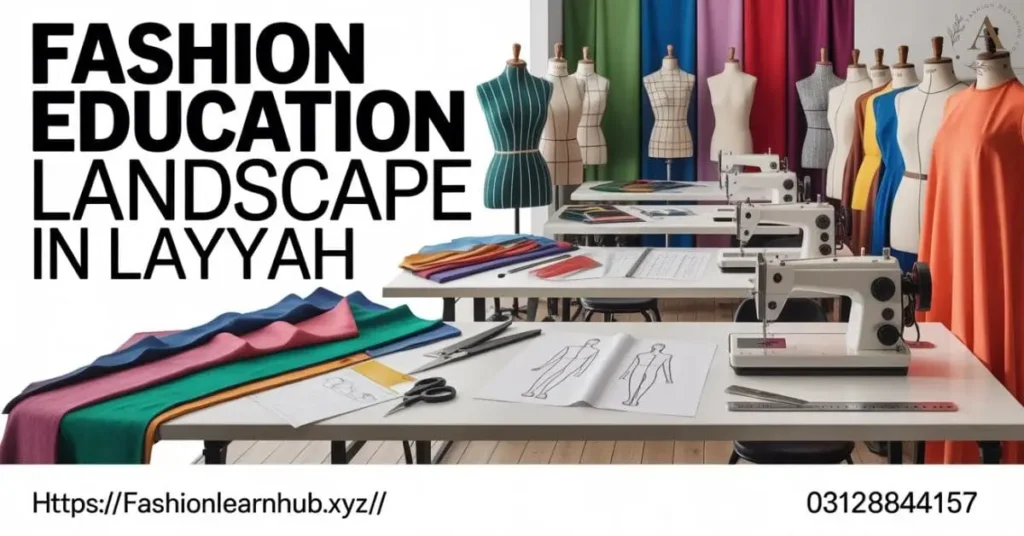
The fashion designing education infrastructure in Layyah has been developing steadily over recent years, reflecting broader trends across Pakistan where creative industries are gaining recognition as viable career paths. While not as extensive as major metropolitan areas.
several institutes and vocational training centers now offer fashion programs catering to different skill levels and career aspirations, making quality education accessible without requiring relocation to distant cities like Multan or Lahore.
Fashion designing courses available in Layyah typically fall into three main categories based on duration and curriculum depth.
Short certification programs lasting three to six months focus on specific skills such as traditional embroidery Fashion Designing Course Layyah techniques particularly relevant to local craftsmanship, Fashion Designing Course Taunsa, basic tailoring and alterations for immediate employment, pattern making fundamentals, or specialized embellishment methods like mirror work or thread embroidery.
These programs appeal to individuals wanting quick skill acquisition for immediate income generation, those testing their interest before longer educational commitments, people with existing sewing knowledge seeking to formalize specific capabilities, or women seeking home-based income opportunities while managing family responsibilities.
Certificate programs spanning six months to one year provide broader foundational training covering essential design principles. These programs teach fashion sketching and illustration, pattern drafting and construction, garment assembly techniques,
fabric selection and properties, Fashion Designing Course Layyah, basic color theory and coordination, embellishment methods, and fundamental business concepts. They balance theoretical knowledge with practical workshops, preparing students for entry-level design work.
Employment with local boutiques or tailoring establishments, or launching small-scale independent businesses serving local communities and surrounding areas.
Also Read: How to Build a Portfolio in Fashion Designing Chakwal 2026
Core Curriculum Components in Fashion Designing Course Layyah
The curriculum across fashion designing programs in Layyah includes several core subject areas forming the Fashion Designing Course Layyah oundation of comprehensive fashion education, though specific emphasis may vary based on institute focus and local market demands.
Fashion illustration and sketching develops students’ abilities to translate design concepts onto paper effectively and professionally.
Students learn figure drawing with proper proportion and anatomy, garment rendering showing fabric texture, drape, and movement, technical flat sketches for clear communication with pattern makers and clients, and presentation techniques for client proposals and portfolio development.
This visual communication skill proves essential for conveying ideas to clients who may struggle to imagine designs from verbal descriptions alone, collaborators needing clear direction, and manufacturers requiring precise specifications.
Also Read: How to Succeed in Your Fashion Designing Course Chiniot
Pattern making and drafting teaches the technical process of creating accurate templates from which Fashion Designing Course Layyah garments are cut and assembled precisely. Students learn accurate measurement taking using proper techniques, drafting basic blocks for different garment types including bodices, sleeves.
Skirts, trousers, and traditional Pakistani garments like shalwar kameez, modifying patterns creatively for style variations and design elements, grading patterns systematically for different sizes, Fashion Designing Course Layyah and understanding how specific pattern changes affect final garment fit and appearance. This technical foundation enables creating well-fitted, professionally constructed garments that flatter various body types rather than producing ill-fitting disappointing results.
Also Read: How to Succeed in Your Fashion Designing Course Jhelum 2026
Garment construction and tailoring covers the actual assembly process transforming cut fabric into finished wearable pieces. Students learn various seam types and their appropriate applications for different fabrics and garment areas, professional finishing techniques creating clean interiors that look as good as exteriors.
Zipper and closure installations including invisible zippers, button placement, and hook fastenings, lining and interfacing applications providing structure and professional finish, pressing and ironing methods achieving crisp professional appearance,
and quality control standards ensuring durability and aesthetic appeal meeting professional expectations. Extensive hands-on practice in construction develops the essential manual skills and muscle memory for bringing designs to physical reality efficiently and professionally.
Also Read: How to Start Your Fashion Designing Course Pakpattan 2026
Textile science and fabric knowledge helps students understand different fiber types including natural fibers like cotton prevalent in local agriculture, silk, and wool versus synthetic options, fabric construction methods like weaving, knitting, and non-woven techniques, fabric behavior including drape, stretch, recovery properties, and how they perform when worn, care and maintenance
Requirements for different textiles ensuring garment longevity, and selecting appropriate fabrics for specific garment types and intended Fashion Designing Course Layyah effects. Fashion Designing Course Karor Lal Esan, This knowledge prevents costly mistakes like choosing unsuitable fabrics that don’t achieve intended design effects or frustrate clients with poor performance.
Color theory and coordination teaches principles of color relationships on the color wheel, creating harmonious palettes that work together visually without clashing, understanding cultural color associations and symbolism particularly relevant in Pakistani and specifically Layyah’s cultural context, seasonal color trends in fashion markets,
and using color strategically to create desired emotional responses or visual effects in designs. Strong color sense distinguishes memorable impactful designs that clients love from mediocre forgettable ones that fail to inspire.
Also Read: Best Fashion Designing Course Toba Tek Singh 2026
Embellishment and embroidery methods, particularly important in Pakistani fashion traditions and Layyah’s craft heritage, cover traditional hand embroidery techniques passed down through generations in local communities, machine embroidery applications for efficiency and consistency in production, beadwork and sequin
application creating textural interest and visual appeal, mirror work and other regional specialties reflecting local craftsmanship, fabric manipulation techniques like pleating, gathering, smocking, and tucking, and combining various embellishment methods effectively without overwhelming designs or appearing cluttered. These skills are especially valuable for bridal wear and formal clothing specialization where elaborate embellishment commands premium prices.
Financial Investment Required for Fashion Designing Course Layyah
Understanding the complete financial picture helps prospective students plan appropriately and select suitable programs within their realistic budgets without overextending financially.
Course fees in Layyah vary based on program length and depth, institute reputation and establishment history, facility quality and equipment availability, instructor experience and credentials, and what services or materials are included in tuition versus charged separately. Short certification courses typically range from eight to eighteen thousand rupees depending on duration, specific specialization focus, and institute.
Certificate programs spanning six months to one year generally cost eighteen to forty thousand rupees for complete tuition. Comprehensive diploma courses, when available, usually range from thirty-five thousand to ninety thousand rupees, with particularly well-established institutes sometimes charging toward the higher end for programs offering modern equipment, experienced faculty, and stronger industry connections.
Beyond tuition fees, students must realistically budget for additional expenses that accumulate throughout their education period. Fabric and materials for course projects typically cost three to ten thousand rupees over a one-year program, varying significantly based on project requirements, fabric quality choices, and whether the program includes many practical garment creation projects or focuses more heavily on theory and technique demonstration.
Personal supplies including professional scissors that cut cleanly, accurate measuring tapes, pins, needles, thread in various colors, sketchbooks, and pattern paper add approximately two to five thousand rupees initially.
A personal sewing machine for home practice, while not always mandatory for course completion, costs twelve to thirty thousand rupees for quality basic models that serve students well through education and into early career work without constant repairs or limitations.
Many Layyah institutes recognize significant financial constraints facing students from modest agricultural and working-class backgrounds and consequently offer payment flexibility making education more accessible to deserving students regardless of immediate financial capacity.
Monthly installment plans allow spreading costs throughout the program duration easing cash flow burden. Semester-based payments divide total fees into more manageable chunks. Some institutes provide modest discounts for advance full payment eliminating administrative tracking costs, sibling enrollments bringing multiple family members, or students demonstrating genuine financial need through documentation.
During admission inquiries, ask explicitly and specifically about all available payment options, any scholarship or financial assistance programs that might exist, and whether any additional fees might apply during the course for materials, examinations, certifications, or other purposes that weren’t clearly communicated initially.
Calculate the complete total investment including absolutely all costs, then realistically assess this against post-graduation earning potential in Layyah’s specific market context. Entry-level fashion work or independent business startups typically generate quite modest initial income that grows gradually as skills improve,
portfolios strengthen, and reputations develop through satisfied clients who refer others. Understanding this realistic growth timeline helps set appropriate financial expectations and prevents bitter disappointment when immediate high earnings don’t materialize despite completing education and working hard.
Career Opportunities After Fashion Designing Course Layyah

Completing fashion education opens diverse career possibilities both within Layyah’s local market and in broader regional contexts when graduates are willing to be strategic and flexible.
Employment opportunities exist with established fashion businesses, boutiques, tailoring shops, or local garment workshops in Layyah and nearby cities including Muzaffargarh.
Multan, and Bhakkar. These positions provide steady predictable income reducing financial uncertainty and stress, valuable industry experience observing how successful businesses actually operate day-to-day, and opportunities to learn advanced techniques from experienced professionals before potentially launching
independent ventures. Employment offers considerably more financial stability than independent business during the uncertain learning years immediately following graduation when skills are still developing.
Specialization in bridal and formal wear proves particularly lucrative throughout Pakistan including Layyah where wedding celebrations represent major family investments. Weddings and special occasions drive substantial fashion spending, with families willing to invest significantly in elaborate custom wedding outfits, formal party wear.
And ceremonial clothing that will be photographed and remembered. Designers who master intricate embroidery, traditional embellishment techniques, cultural aesthetics reflecting local preferences, and can create show-stopping bridal pieces can command premium prices. Many Layyah designers build entire sustainable businesses around bridal collections and wedding-related clothing commissions that provide concentrated income during peak wedding seasons.
MY Final Thought:
Pursuing fashion designing education in Layyah represents a meaningful investment in your creative future and a practical pathway toward building a fulfilling career, though success requires realistic understanding of both the genuine opportunities and honest challenges unique to this district’s context.
Layyah’s smaller scale and agricultural character create a very different environment from major fashion centers like Lahore or Karachi. The district offers distinct advantages including dramatically lower costs of living and business operation.
less intense competition allowing easier market entry for new designers, strong community bonds supporting small businesses through powerful word-of-mouth referrals, and authentic appreciation for traditional craftsmanship and cultural aesthetics. These factors genuinely support fashion careers when leveraged strategically.
FAQs
What are entry requirements for fashion designing courses in Layyah?
Most institutes require at least matriculation completion, though some short courses accept students after middle school. No prior fashion experience or sewing skills are necessary for beginner programs. Some institutes conduct basic interviews assessing your motivation and commitment rather than testing existing skills.
How long do courses take to complete?
Duration varies by program type. Short certification courses focusing on specific skills typically run three to six months. Certificate programs providing broader training generally span six months to one year. Comprehensive diploma courses, when available.
What are typical course fees?
Fees vary based on program length and institute. Short courses typically cost eight to eighteen thousand rupees. Certificate programs generally range from eighteen to forty thousand rupees. Diploma courses usually cost thirty-five to ninety thousand rupees.
What will I learn in these courses?
Standard curricula cover fashion sketching and illustration, pattern making and drafting, garment construction and tailoring, textile knowledge, color theory, embellishment techniques including traditional embroidery, fitting and alteration.
What career options exist after graduation?
Common paths include starting home-based businesses taking custom orders, seeking employment with local boutiques or tailoring shops, specializing in bridal and formal wear, teaching fashion designing, providing freelance services, or selling through online.

Fashion Learn Hub is a trusted fashion education platform with 5 years of experience in providing quality styling tips, trend insights, and comprehensive fashion tutorials. We’ve helped thousands of fashion enthusiasts discover their unique style and master the art of fashion.